It is fair to say peptides are having their moment in the spotlight. From weight management and skin rejuvenation to recovery, longevity and regenerative medicine, they are increasingly appearing in clinic conversations, conference programmes and social media feeds.
But ‘peptides’ is an exceptionally broad term. It encompasses established medicines such as insulin and licensed GLP-1-based treatments, ingredients used in topical skincare, and experimental compounds including BPC-157, TB-500 and MOTS-c, which are being promoted for everything from tissue repair to metabolic health and healthy ageing.
For aesthetic practitioners, the challenge is separating promising science from proven treatment – and understanding what that means for regulation, patient safety and medical malpractice insurance.
Peptides are short chains of amino acids that perform numerous functions within the body, including acting as hormones and signalling molecules. They are involved in processes ranging from metabolism and inflammation to tissue repair and skin function.
Some peptide-based medicines have decades of clinical use behind them. Insulin is perhaps the best-known example, while the success of GLP-1-based medicines has more recently brought peptide therapeutics firmly into the mainstream.
Peptides are also well established within skincare. Copper peptides such as GHK-Cu, for example, have been studied for their potential role in collagen synthesis, extracellular matrix remodelling and wound healing.
But this evidence cannot automatically be extrapolated to injectable use. There are no adequately powered human trials establishing injected GHK-Cu as a treatment for skin quality, hair growth, recovery or systemic anti-ageing, and injection brings additional considerations around dose, sterility, purity and systemic exposure.
The same caution applies to compounds such as BPC-157, TB-500 and MOTS-c. While there may be interesting preclinical research behind them, the evidence supporting their use as clinical treatments is much less established.
This distinction can easily become lost when treatments are promoted through the language of ‘regeneration’, ‘longevity’ and ‘biohacking’. A plausible biological mechanism does not necessarily demonstrate that a treatment is safe or effective in patients.
The success of GLP-1-based medicines, alongside growing interest in longevity and regenerative medicine, has helped drive demand for other peptide therapies.
Social media has accelerated this considerably. Compounds once discussed primarily within research settings are now appearing on podcasts, TikTok and online biohacking communities, sometimes accompanied by significant claims around their potential benefits.
The British College of Aesthetic Medicine (BCAM) warned practitioners in June 2026 about the growing promotion of injectable peptides for anti-ageing, fat loss, skin rejuvenation and performance enhancement. It highlighted that, while some peptide medicines are regulated and licensed for specific indications, many products promoted as ‘research peptides’ have not undergone the same assessment for quality, safety and efficacy.
Developments in the US have added to the conversation. In July 2026, an FDA advisory committee recommended six specific peptides - BPC-157, KPPV, TB-500, MOTS-c, Semax and Epitalon - for potential inclusion on a list of substances that may be used in pharmacy compounding. A seventh, emideltide, was voted down. This does not mean the peptides have been FDA-approved as medicines, and the recommendations are non-binding. Crucially for UK practitioners, the decision does not change their regulatory status here.
Practitioners need to establish the regulatory status of the specific peptide product they are considering rather than assuming that all peptide therapies fall into the same category. Products intended for therapeutic use fall within the scope of medicines legislation regulated by the Medicines and Healthcare products Regulatory Agency (MHRA).
UK legislation does provide a route through which an unlicensed medicine may sometimes be supplied to meet the special clinical needs of an individual patient where an appropriate licensed medicine is not available. Therefore, ‘unlicensed’ should not automatically be interpreted as ‘illegal’.
However, this does not provide unrestricted freedom to prescribe or administer experimental peptides as routine wellness or longevity treatments. Prescribers considering an unlicensed medicine have professional responsibilities around the evidence supporting its use, their reasons for prescribing it, patient consent and ongoing care.
Clinics also need to consider how treatments are promoted. UK rules restrict the advertising of unlicensed medicines and prescription-only medicines to the public.
Particular caution is needed around products sold online as ‘research peptides’ or labelled ‘for research use only’ or ‘not for human consumption’. Commercial availability should never be mistaken for clinical validation.
BCAM has highlighted potential risks associated with unregulated peptide products, including inaccurate dosing, contamination, uncertain purity and a lack of pharmacovigilance.
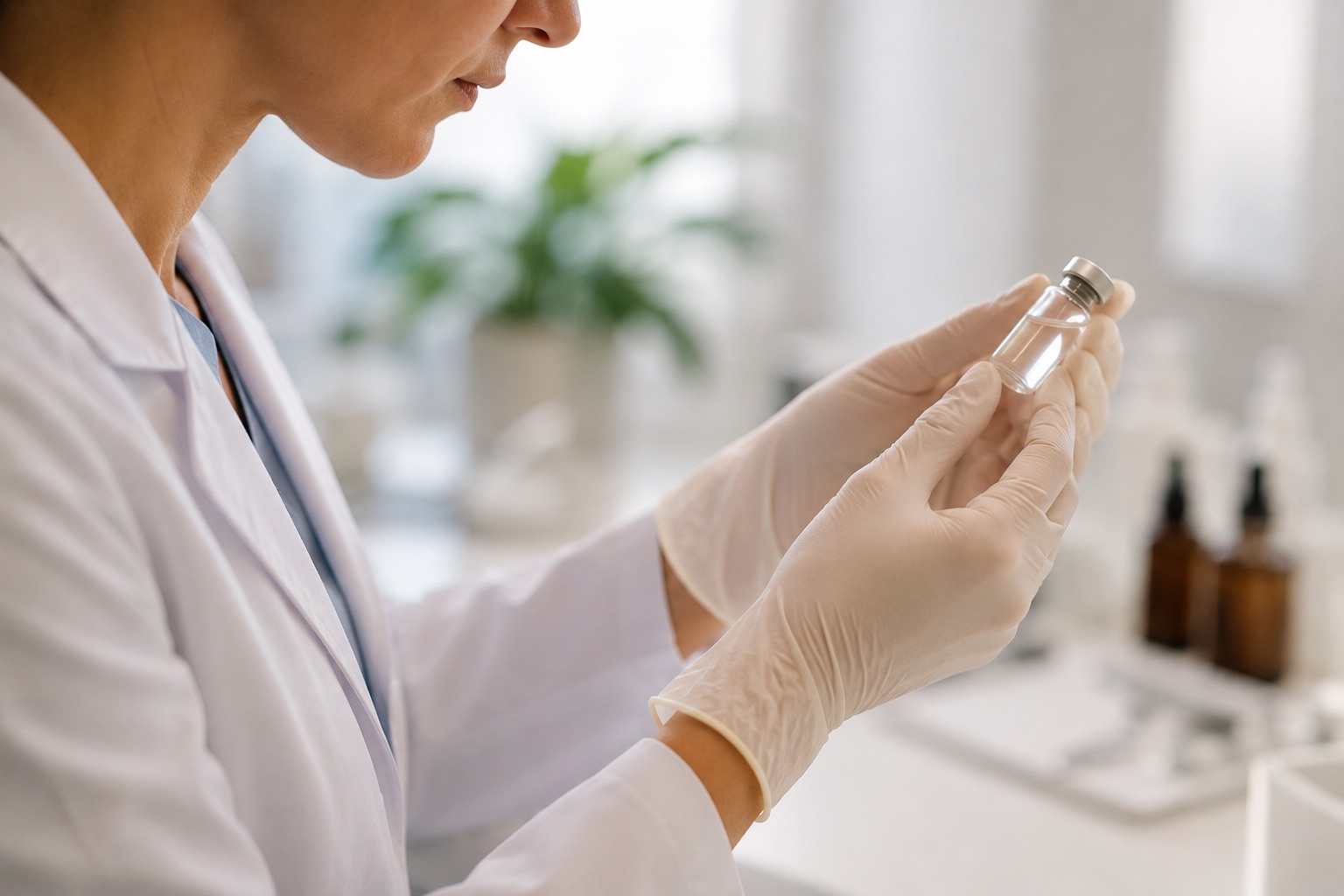
For an injectable treatment, practitioners need confidence not only in the active ingredient but in what is actually contained within the vial, where it was manufactured, how it entered the supply chain and whether its sterility and concentration can be verified.
A product being widely discussed online, available to purchase or used in another country does not automatically make it appropriate for UK clinical practice.
Regulation and clinical evidence are only part of the picture. Practitioners also need to establish whether a treatment is covered by their medical malpractice insurance.
Hamilton Fraser's medical malpractice insurance covers the treatments and procedures specified on the policy schedule. A new or emerging treatment should not therefore be assumed to be covered simply because a practitioner already holds insurance for aesthetic practice.
Products matter too. Hamilton Fraser does not cover practitioners carrying out cosmetic procedures using unauthorised products.
Before adding a peptide treatment to your clinic, speak to your insurer. The specific peptide, product, indication and route of administration may all be relevant when determining whether you are covered.
As interest in peptides grows, practitioners should look beyond the umbrella term and ask:
It may also be worth asking patients specifically about peptide use during consultation. Some patients may already be self-administering products obtained online without thinking to mention them as part of their medication or supplement history.
Peptides have genuine therapeutic potential. Insulin and GLP-1-based medicines demonstrate what peptide therapeutics can achieve when promising science is followed by rigorous clinical research, regulatory scrutiny and appropriate manufacturing controls.
Research may ultimately establish valuable clinical uses for some of the peptides currently generating interest. But promising science, clinical evidence, regulatory status, legal supply and insurance cover remain separate questions.
For practitioners, keeping pace with innovation means asking all of them before a new treatment becomes part of everyday practice.
If you want to find out more about how Hamilton Fraser can support you, get in touch with our specialist team today on 0800 63 43 881 or visit our website to get an online quote.