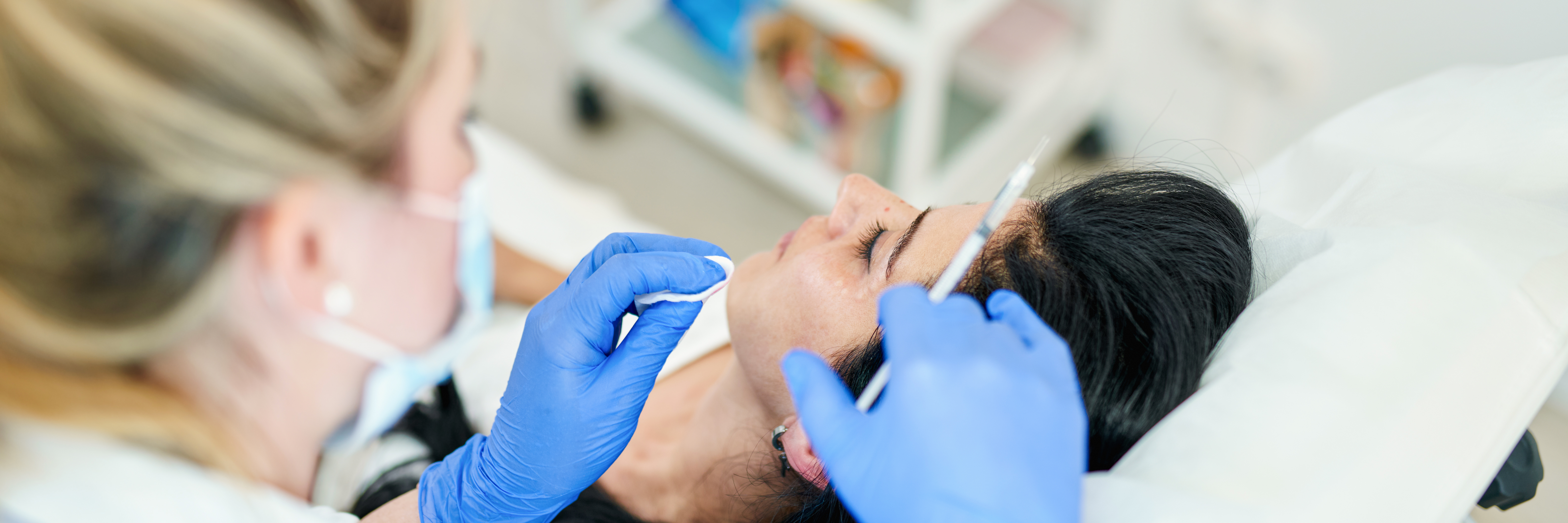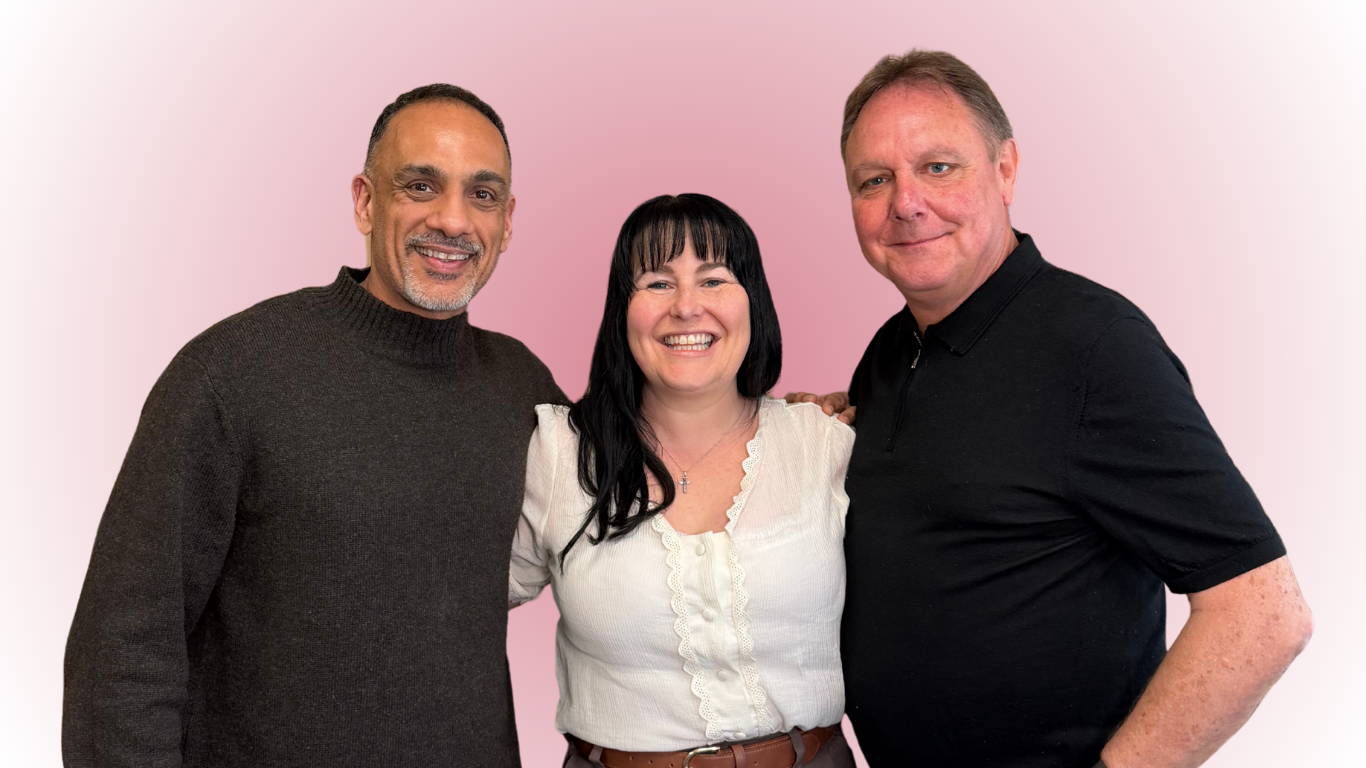
In the latest episode of the Aesthetics Business Cast, hosts Vicky Eldridge and Eddie Hooker are joined by Dr Harry Singh, one of the UK's most recognised aesthetic practitioners.
Harry has been carrying out facial aesthetics since 2002, has treated over 5,000 cases and is a trainer for Medfx and Galderma. He also sits on the editorial board of Aesthetic Medicine and is a Fellow of the International Academy for Dental Facial Aesthetics. More recently, he has spoken openly about his own health and fitness journey, giving him a uniquely personal perspective on where the male aesthetics market is heading.
Harry opens with a striking statistic. When he began practising facial aesthetics in 2002, virtually none of his patients were male. Today, around 25 per cent of his patient base is male, a substantial and growing share of any clinic's potential business.
So what is driving the growth? Harry identifies three key forces.
The first is what he calls the Turkey effect. Not Turkey teeth, but hair transplants and the boom in Turkish barbershops. Men now visiting Turkey for hair restoration are being introduced to a broader grooming culture. Turkish barbers, offering full beard sculpting, skin fades and eyebrow shaping, are quietly normalising the idea that grooming is not just for women.
The second is the gym effect. Harry recounts seeing men in gym changing rooms blow-drying their hair, applying moisturiser and hand cream, quietly taking their appearance seriously in a way that would have been unimaginable 20 years ago.
The third is the social media effect. Twenty years ago, men compared themselves to friends, family and colleagues, perhaps a dozen people in total, and most placed themselves comfortably in the top half. Today, they are comparing themselves to millions of influencers and celebrities. Research Harry cited suggests 56 per cent of men feel the results they see on social media are unattainable, and 42 per cent feel pressurised by how they look.
Harry breaks the male aesthetic patient down into three broad groups.
The first is the professional, typically aged 40 and above, often in sales or finance, competing with younger colleagues and looking for a subtle refresh.
The second is the ageing, sun-damaged patient, often a bodybuilder or someone whose lifestyle has aged them prematurely. This group also increasingly includes GLP-1 users experiencing "skinny jab face", significant fat loss in the face that leaves them looking gaunt.
The third is a group that surprised Harry: Asian immigrant patients, particularly from India and Pakistan, who have always had excellent skin but experience acne and scarring after moving to a Western diet and climate. This group is a strong candidate for PRP, radiofrequency microneedling and skin-focused treatments.
One of the most useful sections of the conversation is Harry's breakdown of how male patients differ from female patients in the consultation room. Where women often ask "will it work?", men tend to skip that question entirely. They already assume it will work. What they want to know is: "will I still look like myself? Will I feel like myself? Will other people notice?"
Because the social downside of being noticed is much higher for men, whether it is the ribbing on building sites, in football teams, or in dressing rooms, subtlety is paramount. Harry has adapted his treatment plans accordingly. For male patients, he documents explicitly what he will not do. No frozen look, no obvious changes, no feminisation of masculine features. Patients appreciate seeing that thinking process on paper.
He also cautions against making assumptions about what a "masculine" result should look like. Two of his own male patients are hairdressers who specifically want a more feminine aesthetic. As always, individual consultation is everything.
Perhaps the most personal part of the episode is Harry's account of his own weight loss and fitness transformation. Prompted by a comment from his wife, delivered in classic indirect fashion, he decided to try a GLP-1 medication for around 10 weeks. He was clear about how he approached it: through a GP, with proper blood testing, and combined with serious training and nutrition.
His weight dropped from 110kg to around 75kg. But more importantly, it kickstarted a mindset shift. His food noise disappeared, his skin improved, his sleep improved, and his energy transformed. It also brought a wave of new patients. Half his existing patients knew him and commented on the change, while the other half seemed nervous to ask, fearing illness, and new gym members began enquiring about treatments once they realised there was a doctor in their midst.
Harry is candid about the risks, too. He has seen patients who stay on skinny jabs too long, lose too much facial volume, and then need extensive filler or biostimulator work to restore that lost volume. And crucially, he warns about people relapsing and regaining weight if they do not change their mindset alongside the medication. The jab is a tool, not a solution.
Harry's personal experience has also shaped his clinic offering. He now offers blood testing as a service, checking vitamin D, diabetes markers, kidney function, blood pressure and more, particularly for patients on GLP-1 medications. Eddie noted this fits neatly into the wider industry shift towards longevity and wellness, and hinted that insurance may not be far behind in recognising this as a discrete area of practice.
The conversation also touched on peptides, a topic Harry has written about for Aesthetic Medicine. His view is direct: 99 per cent of peptides on the market are unlicensed and cannot legally be sold or used, despite the volume of medical professionals promoting them on Instagram.
He grouped peptides into three broad categories: weight loss (Mounjaro, with the newer Retatrutide showing promise for weight loss while preserving muscle), performance and supplementation (growth hormone peptides, NAD+, BPC, MOTS-c), and skin-focused peptides. Of the latter, he singled out GHK-Cu (copper peptide), which he believes could become genuinely significant for skin quality and post-weight-loss skin tightening once fully licensed.
His advice? Do not jump on the bandwagon. Get educated now so you are ready when licensing catches up.
For clinics wanting to grow their male patient base, Harry offers concrete guidance.
Start with your own team. If your clinic is entirely female-led, consider whether a male practitioner might make some patients feel more comfortable. Do not advertise "Botox for men + £50", as it is a poor message. Instead, create a dedicated page on your website that speaks to male concerns, not to female-style transformations. Post average results rather than your very best cases, because most men do not want to look transformed.
Offer educational content. Harry's clinic uses a free "male guide to facial aesthetics" as a lead magnet, capturing details for a follow-up sequence that lets hesitant men move at their own pace.
And go where the male patients already are: Turkish barbers, gyms, personal trainers, trichologists. Harry's clinic actively cross-refers with local male PTs and places leaflets in barbershops.
Asked for his single most important piece of advice, Harry was clear: address male patients' emotional needs first, and treat the individual, not the category. Men will come in for anti-ageing, hair loss, acne, skin quality, tightening after weight loss and more. Be ready for the full spectrum, get the emotional side of the consultation right, and the rest will follow.
Listen to the full episode here: Men's aesthetics: Beyond Brotox, body image and the modern male patient with Dr Harry Singh
For more content on running and growing your aesthetic clinic, visit the Hamilton Fraser Content Hub.