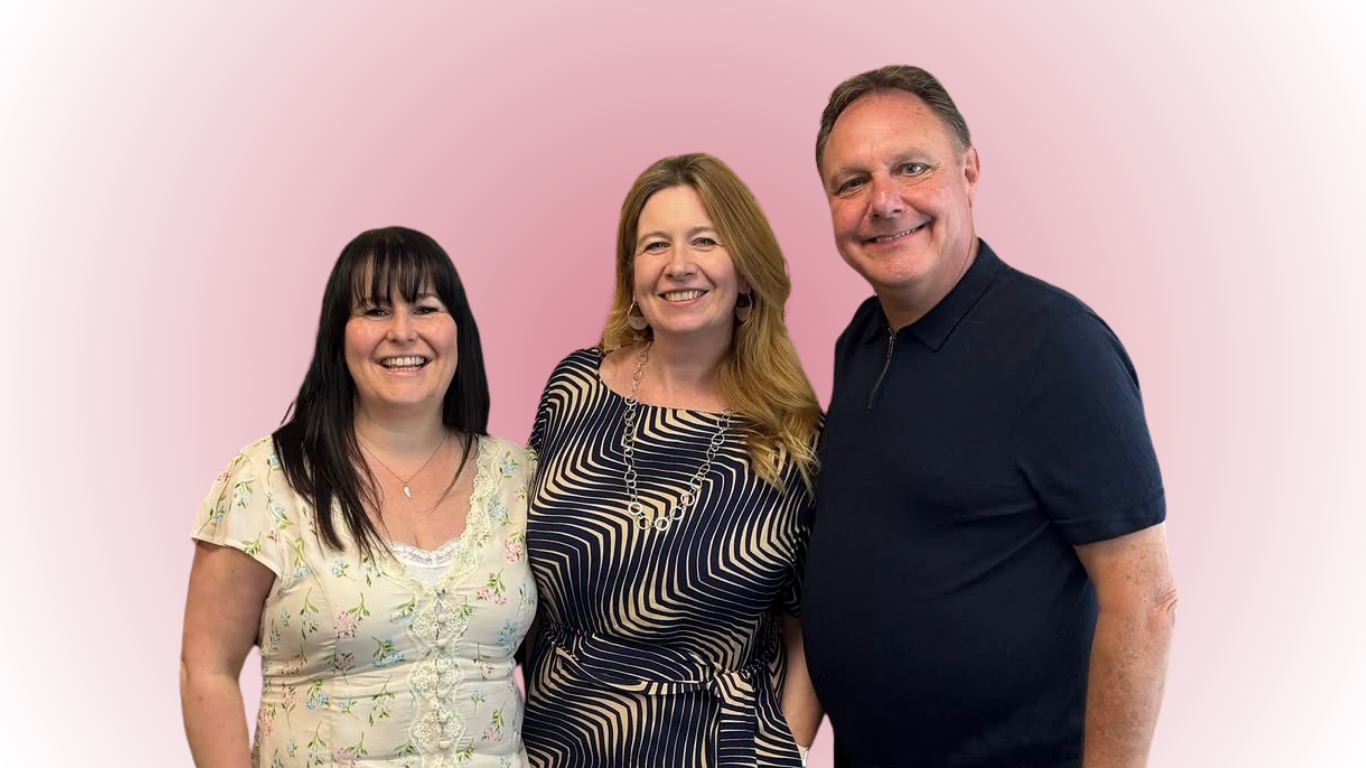
In the latest episode of the Aesthetics Business Cast, hosts Vicky Eldridge and Eddie Hooker are joined by Dr Sam Hills, Clinical Director at Lynton and Honorary Lecturer at the University of Manchester.
Sam oversees Lynton's clinical and training programmes and has spent more than two decades working in laser safety, education and research. She is a faculty member for the British Medical Laser Association (BMLA), a registered laser protection adviser, and has contributed extensively to laser education through publications, university teaching and practitioner training.
This episode dives into why laser safety is about competence rather than compliance, and what clinics can do to build safer, more confident laser services.
Sam opens with a candid account of how she came into aesthetics almost by accident. With a background in physics, a PhD combining physics and pharmacy, and a decade of research at the University of Manchester behind her, she joined Lynton (a University of Manchester spin-off) 24 years ago. Since then, she has watched the laser industry grow from something confined to hospitals and medical clinics into a service now offered across everything from beauty salons to tattoo studios.
Eddie was direct: from an insurance perspective, laser and IPL are one of the largest sources of claims after toxin and filler. Why?
Sam is clear that laser treatments are, on the whole, very safe. In more than two decades in the industry, she has seen many burns and blisters, but only one true scar. The bigger issue, she explains, is that the sector is currently under-regulated. In her words, insurance companies effectively regulate the industry at the moment, because they are the ones requiring core knowledge training and evidence of competence.
The result is a wide spectrum of practitioner readiness. Some people buy a system online and receive almost no training. Others receive only basic system training from the manufacturer, which teaches them how to switch the machine on but not how to make clinical judgements. As Sam puts it, "sometimes they do not know what they do not know".
The BMLA recommends three types of training for any laser practitioner: treatment-specific training (for example, how to carry out hair removal), system-specific training (how to use the particular device in front of you), and laser safety training, also known as the core of knowledge.
Sam emphasises that doing laser treatments is not, in itself, technically difficult. Most modern systems have presets, and if a practitioner sticks to them, they will probably not cause harm, but they will also not deliver the best results. The real skill lies in understanding what the parameters do, when to tweak them, when to combine treatments, and, most importantly, when to say no.
Common causes of adverse events she has seen include assigning an incorrect skin type, overlapping shots, treating clients with recent sun exposure, and treating over tattoos during hair removal, an easily avoidable but painful mistake if the practitioner has not been trained to look for it.
Sam splits laser risk into two broad categories: eye injuries and skin reactions.
Eye injuries are rare but catastrophic. A single laser shot can wipe out central vision. Sam co-authored a BMLA paper last year that identified only around 22 reported eye injury cases in the literature over a 20-year period. Lynton itself has never had one in more than 30 years. Most occur when practitioners treat inside the periorbital rim without using intracorneal shields, or when they mistakenly believe that a closed eyelid will offer sufficient protection. It will not: certain wavelengths can penetrate several millimetres of skin.
She also shared a sobering case of a practitioner who fired a shot into her own eye while cleaning a laser after a hair removal treatment, and required weekly injections into her eyeball to preserve her vision. A useful reminder that safety protocols exist for good reason.
Skin reactions (blistering, burning, pigmentation changes) are more common but usually resolve. The one true scar Sam has seen in 24 years involved a tanned patient who developed an untreated infection after treatment, which impaired healing.
For Sam, the consultation is the most important part of laser safety. It is where practitioners uncover UV exposure, lifestyle factors (does the client play golf every weekend? Are they about to get married in the Bahamas?), skin type, medications, and expectations.
Patch testing is another critical step. Sam is clear: with very few exceptions, patch tests should always be carried out, and enough time should be left between the test and the treatment (a week ideally, a couple of days at minimum). Rushing this step, or worse, doing a patch test and treating the same day, defeats the purpose entirely, because some reactions (particularly pigmentary changes) do not appear immediately.
Beyond the treatment itself, Sam highlighted the importance of good policies and procedures. Following protocols developed by a registered expert healthcare professional, appointing a laser protection supervisor with day-to-day responsibility for safety, servicing machines properly, and having access to a laser protection adviser are all essential.
She also raised the issue of plume inhalation, a risk that is often overlooked. There are documented cases of practitioners developing laryngeal papillomatosis (warts in the airways) from inhaling plume during genital wart removal. Trailing wires and other basic workplace hazards can be just as dangerous as the laser beam itself.
A safety culture, Sam explains, is one where practitioners feel comfortable saying "I am not sure" and knowing where to go for help. It is also one that gives staff time to train properly, rather than rushing them between clients.
Eddie asked about tattoo removal, which continues to grow in popularity. Sam described it as one of her favourite treatments because you can see and hear it working. However, blistering risk is higher, particularly on wrists and ankles, and coloured tattoos (especially reds requiring shorter wavelengths) can be more challenging. Poor-quality imported systems that lack the peak power for effective removal also increase the number of treatments needed and the risk of adverse reactions.
She also raised semi-permanent make-up. Eyebrow removal is common in her clinic, but they will not treat lip liner, as it very frequently turns black after treatment. It is exactly the kind of clinical judgement that comes from experience and proper training.
Sam is cautiously optimistic about the incoming licensing regime, which will cover laser and IPL alongside other non-surgical cosmetic treatments. In Wales and Northern Ireland, and in some parts of England (including Nottinghamshire and several London boroughs), regulation is already in place. In Scotland, it applies to medics but not to non-medics.
Under the new proposals, premises will be licensed, and practitioners will likely need to meet defined training standards. Enforcement is expected to sit with environmental health officers, and Sam has been involved in training EHOs in preparation.
Her key point is that regulation must be proportionate and enforceable. The previous CQC regime, which required registration for laser eye treatments before 2010, ultimately failed because only around 20 per cent of clinics complied, and the enforcement resource was not there. The clinics doing the right thing ended up bearing a disproportionate burden.
She also expects the new framework to include the use of laser protection advisers, following protocols developed by registered healthcare professionals, and access to expert clinical oversight, rather than requiring on-site medical supervision for every treatment.
The conversation also touched on safeguarding, particularly for treatments in intimate areas. Sam noted a recent case where a practitioner faced serious allegations, and highlighted that DBS checks and structured chaperoning are areas the industry needs to address more consistently. Practical points include having enough PPE (goggles) for chaperones to be present, and using the consultation to make expectations, including whether the client wants to wear underwear during intimate hair removal, absolutely clear before treatment begins.
Looking ahead, Sam is excited by several developments. Pain-free treatments have genuinely transformed the client experience over the last decade. She admitted she was initially sceptical, until she lasered one of her own legs to compare. It works.
Lynton's newer Red Touch Pro device is built around the concept of "prejuvenation" or collagen banking, keeping skin in good condition so more aggressive treatments can be delayed. This ties into the wider industry shift towards regenerative approaches.
Combination protocols are also evolving. Lumifacial (a mild chemical peel combined with IPL) has been around for years, but newer combinations involving HIFU, radiofrequency microneedling and fractional lasers for tattoo removal are opening up more effective, and in some cases safer, treatment pathways.
Asked for her single most important message, Sam is clear: training is crucial, and so is continual training. Bad habits stick if they are not challenged. She recommends looking for Ofqual-regulated qualifications, choosing training providers with genuine experience, watching webinars, reading medical papers, and speaking to peers.
She also cautions clinics to look for machines that are CE marked as medical devices. Under the new European Medical Devices Regulation, this is now required even for cosmetic-only treatments, and it matters because CE marked medical devices must maintain their output within a defined tolerance. Without that, energies can drift, and the practitioner can end up carrying the consequences of a machine issue that was never their fault.
Finally, machines must be properly serviced. If a maintenance agreement is not followed, insurance cover can be affected, even if the practitioner has done everything else correctly.
Sam recommends visiting the Lynton website for training and product information. For expert laser safety advice, there are two certifying bodies for laser protection advisers in the UK: RPA 2000 and the Association of Laser Safety Professionals. Environmental health officers at local councils are also a helpful point of contact, and Sam noted that many of them genuinely welcome clinics who are trying to do things properly.
For more laser-related content, guides and podcast episodes, visit the Hamilton Fraser Content Hub.
Listen to the full episode here: Protecting patients, guiding clinics: Laser risks and regulation with Dr Samantha Hills